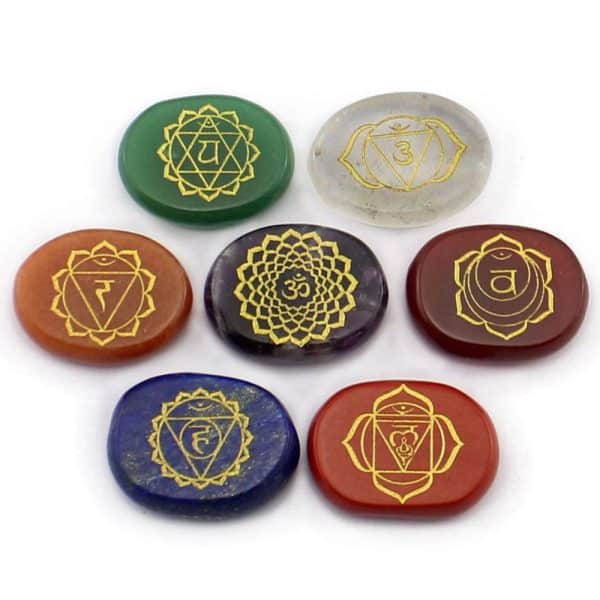
You’ve likely encountered the concept of chakras, the energy centers within our bodies. The term “chakra” originates from Sanskrit, an ancient Indian language, and translates to “wheel” or “circle.”
All seven chakra symbols are designed in a circular form, resembling mandalas, which hold significance in revealing our connection to the cosmos.
Mandalas offer insight into our cosmic harmony, and interestingly, the chakra symbols are, in fact, representations of the lotus within the mandala.
Each lotus chakra features a distinct number of petals, reflecting their unique vibrational frequencies:
- The root chakra symbol boasts 4 petals.
- The sacral chakra symbol exhibits 6 petals.
- The solar plexus chakra symbol presents 10 petals.
- The heart chakra symbol showcases 12 petals.
- The throat chakra symbol displays 16 petals.
- The third eye chakra symbol features 2 petals.
- The crown chakra symbol flourishes with 1000 petals.
Exploring the early traditions of Hinduism and the ancient tantric texts regarding the chakras reveals the sacred and metaphorical significance of each of these symbols. In this article, I will dissect the elements of each chakra symbol, unveiling the hidden secrets they hold.
 Meaning of the Root Chakra Symbol
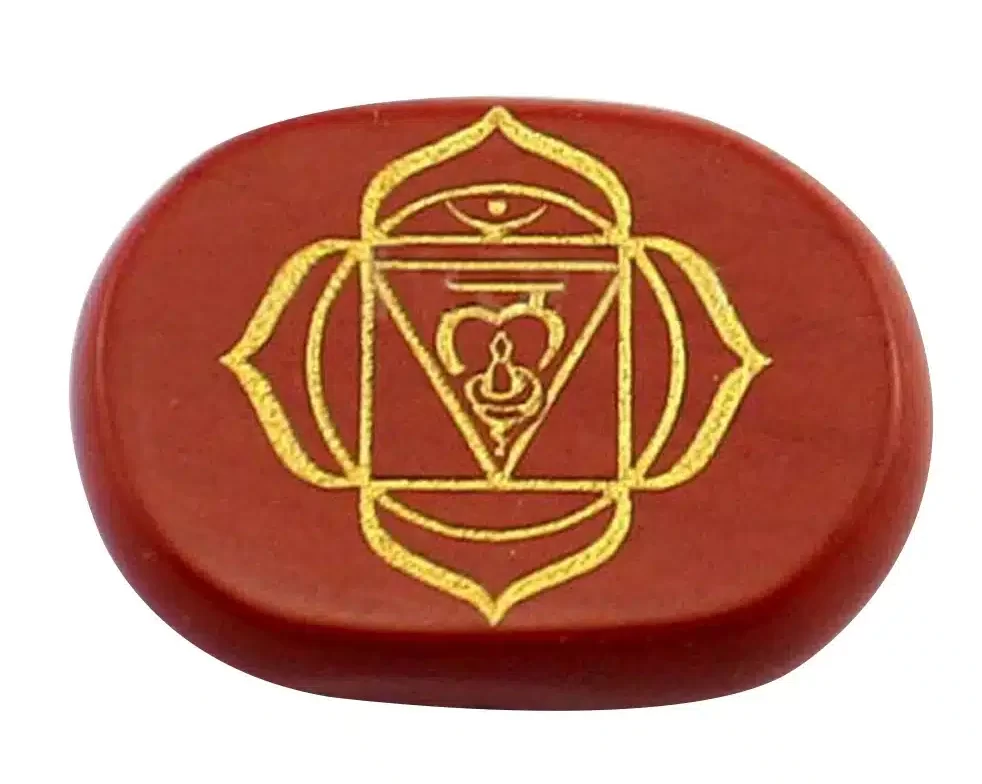
The symbol of the root chakra features a lotus flower with four petals, each representing different aspects of a human being:
- Mind (known as Manas in Sanskrit)
- Intelligence (Buddhi)
- Consciousness (Chitta)
- Ego (Ahamkara)
At the center of this lotus, there is a square, symbolizing the Earth’s grounding and foundational energy. Inside the square, there is a downward-facing triangle, which can be seen as the seed of consciousness and the point where our spirit incarnates into physical form.
As we progress along our spiritual journey towards awakening, we have the potential to expand our consciousness, and the inverted triangle beautifully embodies this concept.
 Meaning of the Sacral Chakra Symbol
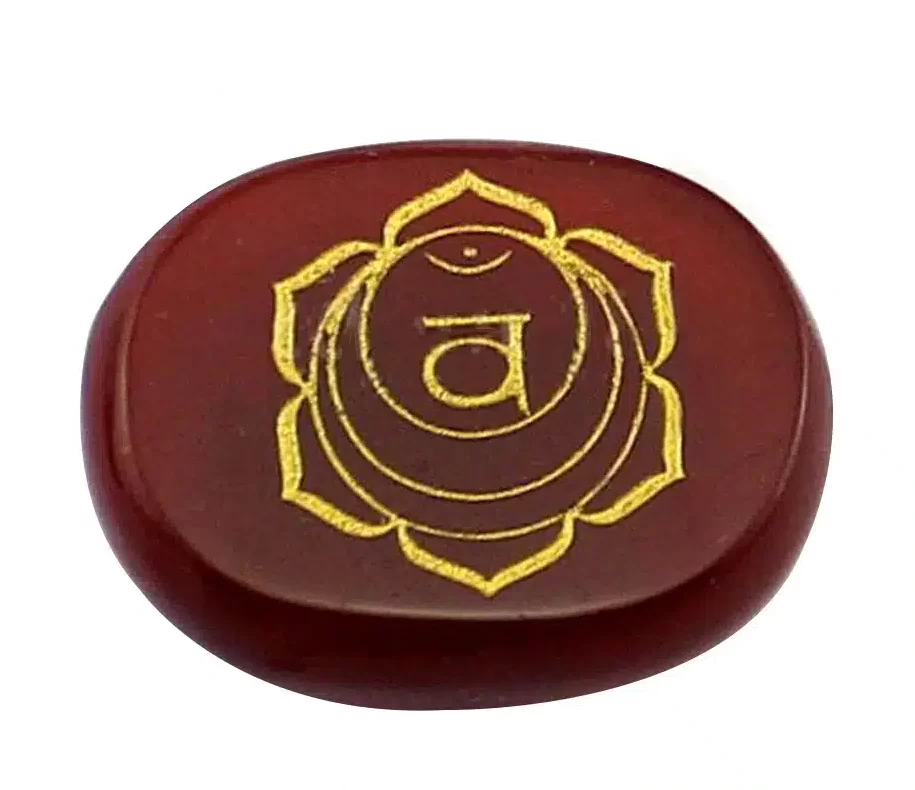
The sacral chakra’s symbol can be characterized as an orange lotus flower, adorned with six cinnabar-hued petals. Within this intricate design lies a circle and a crescent moon.
The core of the sacral chakra symbol hosts the seed mantra, which takes the form of the syllable व VAM.
Directly above the seed mantra’s symbol, you will find a dot that symbolizes the Hindu deity Vishnu.
The second chakra’s symbol centers around the moon and is closely associated with the element of water. Similar to how the 28-day lunar cycle influences the tides of the sea through magnetic attraction, it also impacts the human body. In women, this phenomenon correlates with the 28-day menstrual cycle.
However, the tantric symbol of Svadhisthana introduces another element:
Concealed within the crescent moon is an aquatic creature resembling an alligator, known as the Makara. The Makara boasts a lengthy tail, symbolizing the Kundalini spiral, and represents profound desires and latent animal instincts.
 Meaning of the Solar Plexus Chakra Symbol
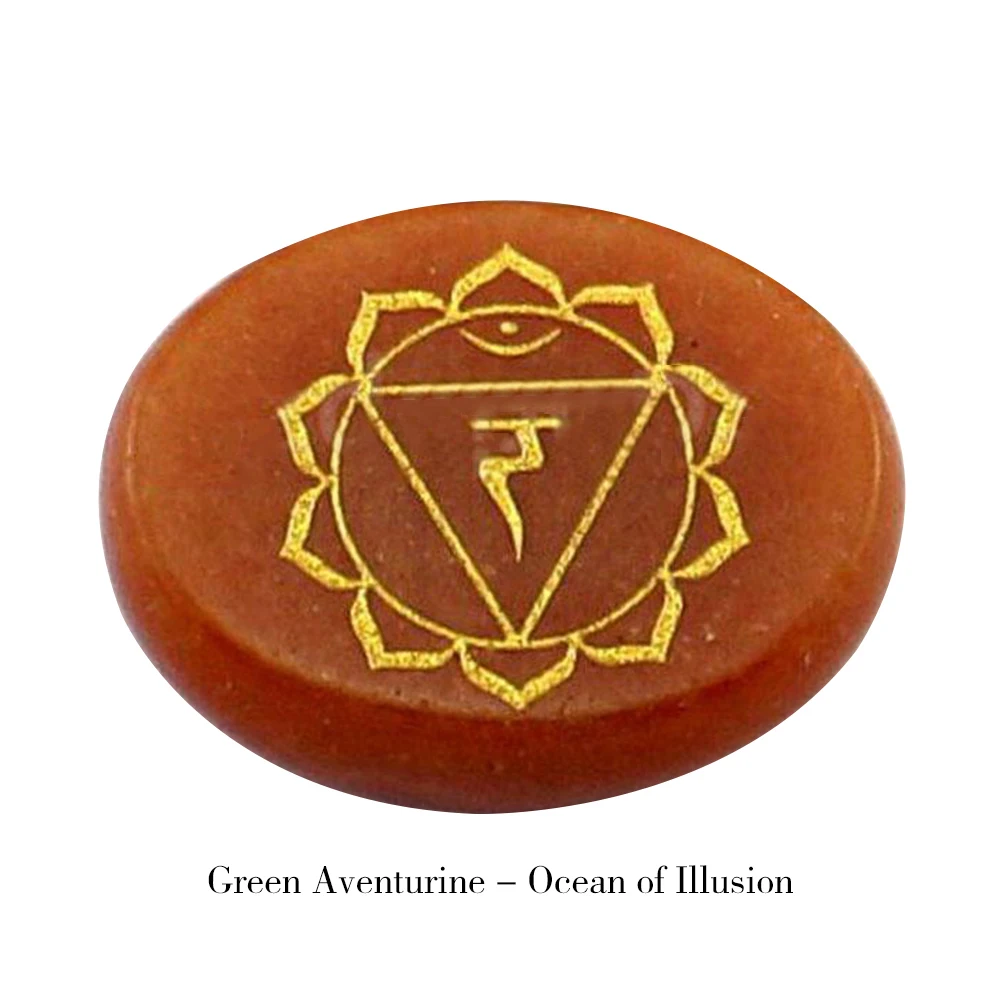
The solar plexus chakra’s emblem is characterized by a yellow lotus adorned with 10 petals and an inverted red fiery triangle (resembling the element tejas) at its core.
Situated at the heart of the solar plexus chakra symbol, the seed mantra is the resonant syllable “RAM.”
The triangle, featuring T-shaped extensions on either side, symbolizes the Sun and is a common element in Hindu artwork depicting the solar plexus chakra, often featuring the deity Vahni supported by the power of RAM.
Each of the lotus petals corresponds to a facet of Bradha Rudra, the associated deity of this chakra.
The black inscriptions (vritti) on the petals of the manipura symbol hold the following interpretations:
- Spiritual ignorance (avidya)
- Thirst (trishna)
- Jealousy (dwesh)
- Betrayal (krurt)
- Shame (ladja)
- Fear (bhai)
- Disgust (nirasa)
- Stupidity (murkhta)
- Sadness (udasinta)
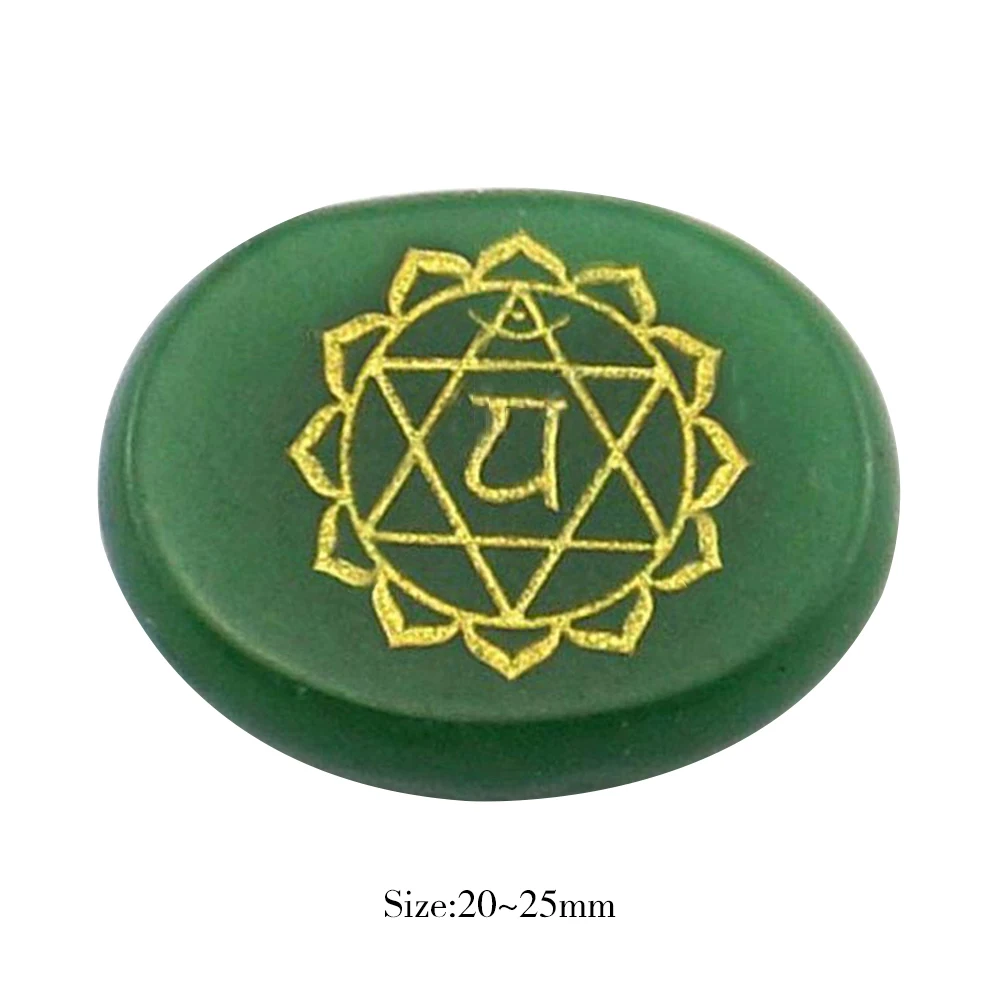 Meaning of the Heart Chakra Symbol
The heart chakra’s symbol features a green lotus adorned with 12 petals and two intersecting triangles, creating a hexagram at its center.
The initial triangle represents the masculine aspect of God, often interpreted as Shiva, while the second triangle symbolizes the feminine aspect of God, often associated with Shakti.
Each petal of the heart chakra’s lotus corresponds to one of the 12 virtues of a pure heart:
- Love
- Harmony
- Sympathy
- Understanding
- Purity
- Clarity
- Compassion
- Unity
- Forgiveness
- Kindness
- World
- Bliss
In Hindu mythology, Vaju, situated at the core of the heart chakra symbol, is the deity linked to the heart chakra. Vaju is also known as the “deity of life” and is associated with air and wind.
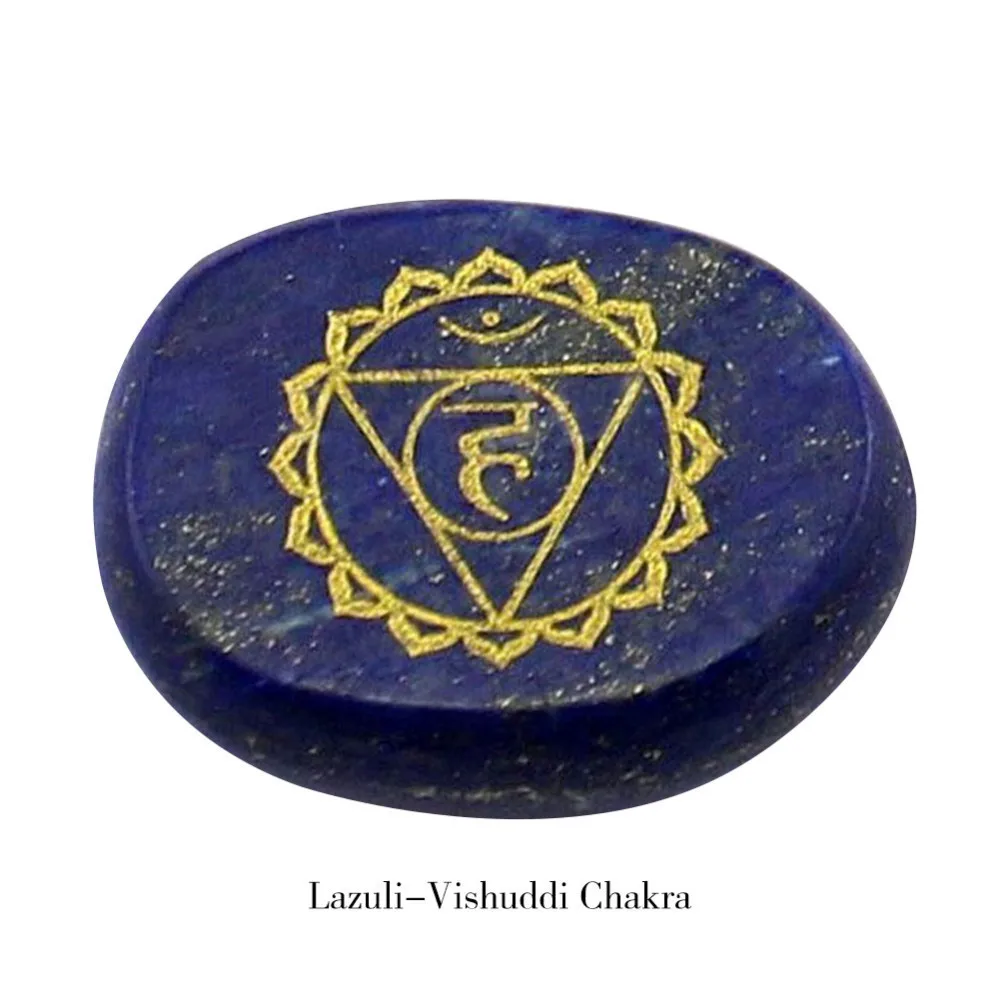 Throat Chakra Symbol Meaning
The throat chakra is symbolized by a vibrant blue lotus embellished with 16 petals, each bearing one of the vowels from the Sanskrit language.
In the heart of this lotus, there resides a downward-facing triangle containing a circular element, symbolizing the concept of space or ether. Within this circle, you can find the sacred syllable HAM (हं), which is known as the Bija Mantra associated with the Throat Chakra.
The deity connected to the throat chakra is Sadashiva, often depicted in attire made from tiger skin and characterized by five heads representing the five elements and ten arms. Sadashiva embodies the harmony of Yin and Yang, as well as eternal purity.
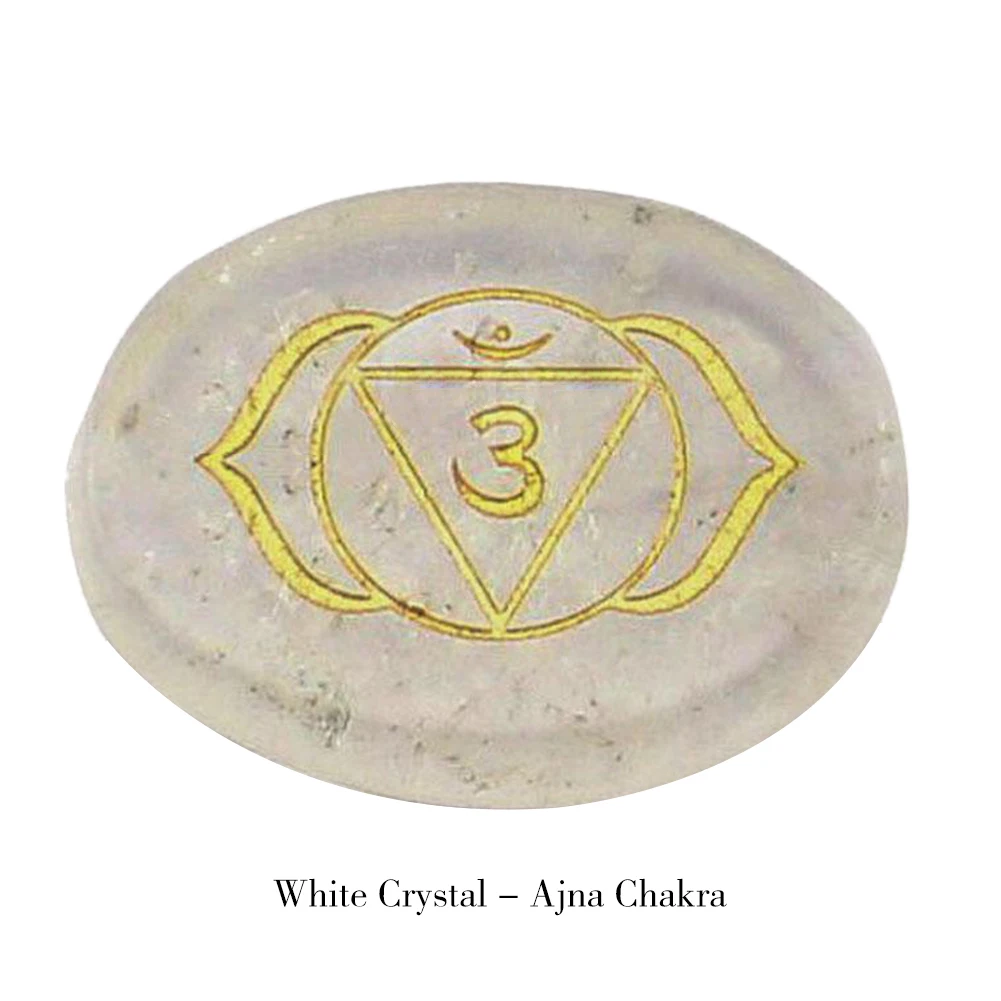 Third Eye Chakra Symbol Meaning
The representation of the third eye chakra comprises an indigo lotus featuring a pair of petals. At the heart of this lotus, you’ll find a downward-facing triangle, symbolizing enlightenment and your connection to the divine through the revered syllable OM (ॐ), recognized as the bija mantra or seed mantra of the third eye chakra.
OM holds a pivotal position as the fundamental sound of the universe, encompassing all other sounds. Moreover, it carries profound spiritual significance in Hinduism, Buddhism, and Jainism, signifying the supreme sound of the cosmos and serving as a symbol of the Creator.
Curious about the two-petaled nature of the third eye chakra symbol? These two petals represent Ida and Pingala, the primary subtle energy channels referred to as “nadis” in Sanskrit. They traverse from the root chakra to the crown of your head, eventually converging with the Sushumna Nadi.
The Sushumna Nadi, situated at the core, serves as the central conduit uniting all your chakras along the spinal axis. It is responsible for directing your kundalini energy upward towards the crown chakra.
On occasion, the left petal of the third eye chakra symbol bears the syllable “HAM” (हं), symbolizing Shiva and the masculine principle, while the right petal is adorned with the syllable “KSHAM” (क्षं), associated with Shakti and the feminine principle.
The two petals of the Ajna Chakra can also be interpreted in various ways, such as representing the physical eyes, the manifest and unmanifest aspects of the mind, or even the pineal and pituitary glands.
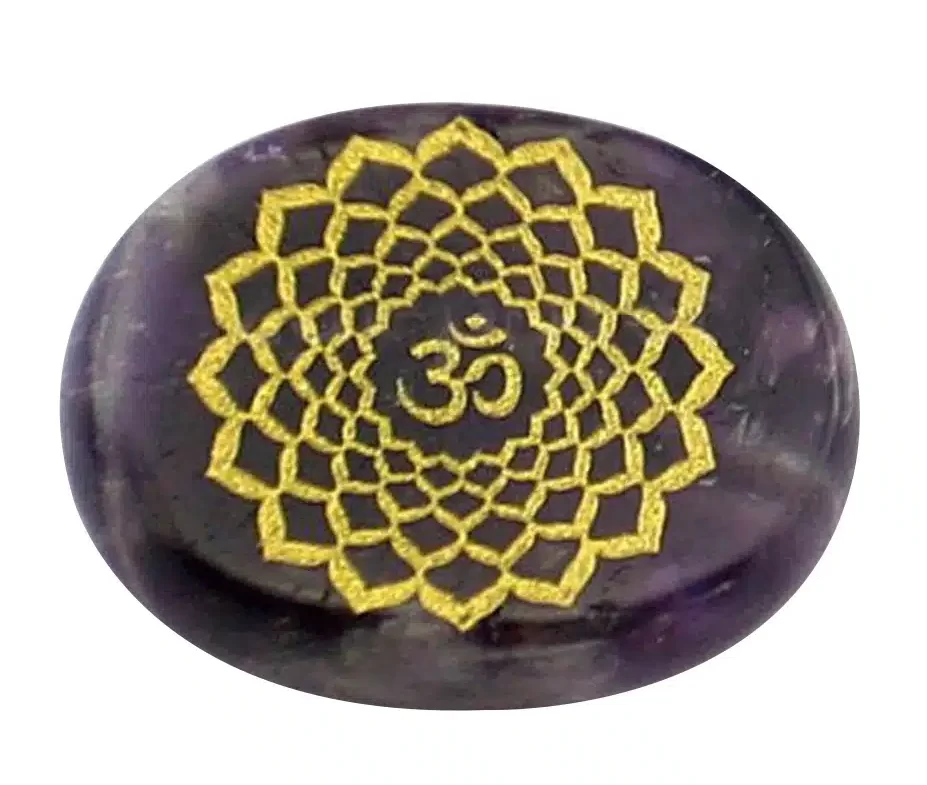 Crown Chakra Symbol Meaning
The crown chakra’s symbol is epitomized by a purple lotus boasting a magnificent array of 1000 petals. Nestled at the heart of this emblematic design, a circular element symbolizes the vast expanse of the cosmos. As your consciousness ascends from the lower chakras toward the crown chakra, a profound connection unfolds, allowing you to merge with the boundless expanse of space. This circular motif can also be conceived as a “Circle of Unity,” signifying the interconnectedness of all living beings within the Universe.
Additionally, the crown chakra symbol frequently incorporates the sacred syllable OM (ॐ) at its center, serving as the bija mantra, or “seed mantra.” OM is revered as the primordial sound of the cosmos, encompassing all other sounds. It holds profound spiritual significance in Hinduism, Buddhism, and Jainism, where it is regarded as the highest resonance of the Universe and a representation of the Creator.
But why does the lotus of the crown chakra bear a profusion of 1000 petals?
The myriad petals symbolize the potent energy of kundalini that surges into the awakened crown chakra. This remarkable sensation can be likened to the unfurling of a flower with innumerable petals atop one’s head.